Interviews

Interviews, Screenwriting

Joe Eszterhaus: Playboy 1998

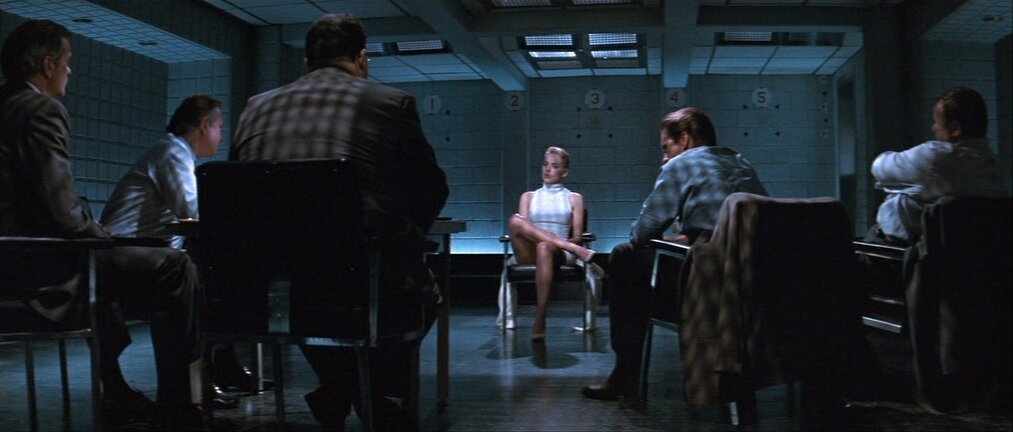
I’ve been thinking about Paul Verhoeven and Joe Eszterhaus lately. The pair worked together on Basic Instinct and Showgirls. When I learned Eszterhaus was the subject of a 1998 Playboy interview, I bought a copy on Ebay and began reading.

Eszterhaus was born in Hungary, grew up in Cleveland, worked as a reporter for the Plain-Dealer, then landed a job at Rolling Stone. At RS, he worked with Hunter S. Thompson and once watched him get high at a party. In 1978, his first effort made it to the screen: F.I.S.T.

Next, Eszterhaus rewrote Flashdance, helping make that movie a hit.

When this interview was published, Showgirls had flopped and had been widely panned. In more recent years, there’s been a reappraisal, including It Doesn’t Suck: Showgirls, by critic Adam Nayman.

Here are a few Joe Eszterhaus highlights from that 1998 interview:

  • On Paul Verhoeven: “He’s my evil twin.”

  • On the success of Basic Instinct grossing $350 million worldwide: “That created a certain hubris on our part.”

  • On Showgirls: “There was a surrealism we thought was organic to the savage Vegas underside we were trying to put on-screen.”

  • A play-by-play of a Verhoeven-Eszterhaus confrontation. Verhoeven: “I’m the director, yah? You’re the screenwriter, yah? You do what I tell you to do.” Eszterhaus: “Listen, if you come across the table at me again like that, I’m going to hit you.”

  • Playboy: “You describe [Showgirls] as a spiritual message that is delivered on a personal level.” Eszterhaus: “In retrospect, it was a godawful stupid thing to say. I think the religious right in this country has a straitjacketing, chilling effect on artistic expression. I was sort of thumbing my nose at the whole thing in what I considered to be an impish way. But it was a stupid thing to do. People took it literally.”

  • Drew Barrymore and Madonna were intrigued with the Elizabeth Berkley part. Verhoeven visited Barrymore and told Eszterhaus she couldn’t dance well enough. Madonna wanted script changes; Verhoeven refused.

  • On screenwriters: “The vision belongs to the writer. Realizing the vision on-screen is what the director does. Too many screenwriters hurt themselves by destroying what they’ve written because they’ve been told to.”

  • On writers slumming in Hollywood: “The only screenwriter who defied that and put every ounce of his being into what he wrote and then fought to preserve it on-screen was Paddy Chayefsky. It ultimately killed him. Screenwriters need to be more like Paddy and less like William Goldman. There’s a story in Goldman’s Hope and Glory that is emblematic of the kind of screenwriter not to be.”

Interviews

Charles Burnett Discusses 'Killer of Sheep'

killer-of-sheep_still-008lg.jpg
Ep. 5: Charles Burnett
Todd Melby

In Episode 5 of The Drunk Projectionist, host Todd Melby interviewed Charles Burnett, writer and director of Killer of Sheep, a 1978 film about a man who works in a slaughterhouse. Killer of Sheep is a beautiful and haunting movie. In 1990, it was added to the National Film Registry. This conversation has been edited for length and clarity.

Charles Burnett: When I first went to UCLA, it was virtually all white. There were few people of color in the film department. [White people] were making films about sexual revolution, flower children, all this sort of thing. And those were topics I wasn’t interested in. I was from South Central and we were concerned about other issues: civil rights, the [Black] Panthers and all that sort of thing; a lot of social issues were dominant.

And so when I got into film, the idea was to make films that reflected what the black community was like and what the black experience was like and tell stories that sort of repudiated or contradict the narrative that Hollywood was producing, continuously perpetuating. And so there was a progressive group on campus that were mostly well-to-do kids who were making films about the working class. Some of them had parents who owned factories. What they had with this formula where the employees had worked together to form a union in spite of the opposition from management. And that’s what the struggle was. And then they succeeded to form a union and everything was happy after that.

Todd Melby: Right. Yes.

Charles Burnett: But in my case, and the people I knew, that wasn’t the case at all. Getting the job was one thing, holding on to it and getting paid an adequate wage [was another thing]. There were more issues. And so there wasn’t any kind of panacea.

You get a job, you lose it, you get another one. It was an ongoing struggle, continuously. It was never ending. And so those are the kind of stories I wanted to tell. The people that I looked up to were the people who stayed with their families and tried to work things out, who worked themselves to death in a way with these hard jobs. A friend of mine’s father was a plasterer. And in the summertime, we would go to work with him. And we’d take all the cement out of the bathtubs or try to keep the mixer working. That was hard. I was kind of a small, thin kind of a person at the time. I'd be dead if I did that for any long period of time.

Those are the kind of people I looked up to. What Hollywood was doing was distorting the sort of people in my community that were doing the right thing. So I wanted to make films about that.

Todd Melby: How did the idea of Killer of Sheep come to you?

Charles Burnett: I wanted to do a film where I didn’t impose my values on this narrative, but [rather] capture things that I had seen growing up in my community.

Todd Melby: When I watched Killer of Sheep the first time I got the sense that I was just there with these people, almost experiencing it with them. It was that kind of film.

Charles Burnett: I wanted it to have this sort of documentary look to it. Adding to that, I didn't want it to have set-up shots and backlighting all this sort of thing and have, you know, all the proper cuts and angles and things like that. It was like if you shot a documentary, you had to take what you get and move on. Even though it was scripted, I wanted to give the illusion that I just set the camera up and just captured what was there. That wasn't the case at all.

Todd Melby: In an earlier interview, you said, you liked beginning a film with a solid image, a solid idea of theme and then a potential storyline. What was the solid image you thought of when you made Killer of Sheep?

Charles Burnett: I was interested in how kids sort of watch adults act and how the games that they play are very hard and destructive. In the opening scene of Killer Sheep, where one of the parents tells this young kid about protecting the family and his brother. And even if your brother is wrong, you don’t let anyone beat him up.

This is what you do. When someone is attacking your brother, family, whatever it is, you defend them and you don’t ask questions of who’s right or wrong, you know? I couldn't reconcile that, but I understood it. And so that was one of the things I was interested in. And also the image … this middle-aged couple, like in their late thirties just trying to do the right thing [and] teach their kids certain values.

Todd Melby: One of the things that’s so fantastic about Killer of Sheep are the visual images. In nearly every scene, there’s something that’s striking, that's  just terrifically set up, where the camera is stationary and something is happening and you're just enthralled. How are you influenced by still photography? 

Charles Burnett: Well, I used to look at a lot of still photos. I think I was excited about being a photojournalist. You know, I’ve seen a lot of black and white journalist photography work. I was impressed by the images, what a single image can convey. And so I actually bought a 35mm camera and started my first day of photojournalism by documenting things in the community. And the first thing I went to was this poor young lady who died of an overdose. And part of her was in the doorway. I mean, the ambulance was there, but they hadn’t taken her out yet or anything like that. So everyone was standing around. So I had this camera and I just started taking pictures and walking up and in close. And the police didn’t do anything. So the more they allowed me, the more I was just clicking away, clicking away, clicking away. [Then a woman in the neighborhood asked] why are you taking pictures? And I didn’t know what to say. I just said something stupid like, ‘Oh, just for fun.’ And she said, ‘You take pictures of tragedy just for fun?’ And all of a sudden that really hit me and I just put my camera away and said, that’s the end of that, you know?

killer-of-sheep_still-021lg.jpg

Todd Melby: What’s your favorite image from Killer of Sheep?

Charles Burnett: I do know one that disturbs me a lot.

Todd Melby: OK. What?

Charles Burnett: Every time I see it, I cringe. There’s a shot of these kids jumping [between] three-story buildings, and you’ll see it from the bottom up, looking up at these kids, flying over the rooftops and stuff. And it’s a gap of like three or four feet between the next building, the jumping from one building to the next. At the time I was doing that, it never occurred to me what would happen if those kids fell, you know? And the fact of the matter is they did it all the time. And that’s where I got the idea to shoot it from because they were doing it. I just wanted to capture it, but I shouldn't have done it. I shouldn’t have allowed that to happen. And I think about every time I see it. That would have been the end of them. So that makes me cringe a bit when I see that scene. I showed you how insensitive you can be when you're behind the camera, you allow anything to happen and you can stand back and look at it from a distance even when it's happening.

Todd Melby: It is a beautiful image, though. And it actually kind of reminds me of that Eugene Atget photo where somebody is kind of jumping over a bit of water someplace. And then I really like the image of the little girl in the dog mask. There’s a scene with Stan. He’s the protagonist of the story. And he’s under the sink and he comes out and he’s talking to a friend. And then suddenly his daughter shows up and she’s probably five or six years old. And she’s got this big dog mask on and you’re like, wow.

Charles Burnett: Everything was storyboarded. And I remember having a mask a while before we shot, long before we shot that scene.

Todd Melby: It works and it’s fantastic.

Charles Burnett: Well, look, the thing I have about that is I try to make everything as low key as possible to some extent without calling attention to it because you didn’t want anything to be cute or anything like that. You want to be like this to know something that was there, like for example, like one of the issues I’ve always had with the film more than anything, was the whole title Killer of Sheep and the fact that the sheep in the film were slaughtered. And you wanted to not to make that connection symbolically about the slaughter and sheep and the people and all this kind of stuff. It's kind of fighting an uphill battle because people ask you what's the relation between the sheep and the people? The fact of the matter is, this guy works in this horrible job of killing sheep and the sheep are placid. They just do whatever.

It’s ironic because the Judas goat leads them up to the killing floor and they follow the Judas goat and then they’re slaughtered. I got the idea from this. I was riding the bus one day and I met this young guy who was in work clothes and I was going to UCLA. And he was telling me he worked in a slaughterhouse. And what he did and how he did it. You’re killing animals and sheep and stuff like that. At the time, they used a sledgehammer on the cows. And so I thought, ‘That’s the kind of job my character needs to have in order to have mental problems.’

Todd Melby: It does help explain why Stan is so depressed.

Charles Burnett: When I was at his meat-packing place up in Vallejo, in northern California, cause you couldn’t shoot in Los Angeles because the vegetarians got in and started making these movies that were anti-meat. So anyway, I went in there and when workers took a lunch break, they’d wash your hands and bring out the sandwiches and sit on a bench and start eating. I became a temporary vegetarian. I couldn’t eat meat anymore for a while. Apparently, Stan wasn’t that kind.

Todd Melby: Yeah. There is one point in the film where he says, I’m working myself into my own hell. I can’t get no sleep at night, no peace of mind. And then and then his friend Oscar, he says, ‘Why don't you kill yourself?’

Charles Burnett: Here is the thing about his gun and [taking] the easy way out. I mean, he’s frustrated, everything like that. But his thing is partly that and trying to keep a sense of who he is.

Todd Melby: And other people can see it, too. They notice that he’s down. They see that he's depressed. And at one point a couple of his so-called friends try to get him to help out on a robbery.

Charles Burnett: He’s upset because they look at him as depraved. I mean, he had opportunities: the lady at the liquor store offered him a job. Her attitude was ‘You know, you don’t really have to work that hard and you can come and be in the back with me and life can be easy for you.

Todd Melby: Why did you put the liquor store scene in the movie?

Charles Burnett: That liquor store is round the corner from my house and it was sort of like a meeting place, a watering hole. We had supermarkets, but I’d been buying more things at the liquor store than any place else. I could just buy it. Not everything. No fruits or anything like that, but they had milk, sugar, they had things that you just needed. It was so much a part of the reality of the neighborhood.

Interviews, Silents

Buster Keaton v. Charlie Chaplin

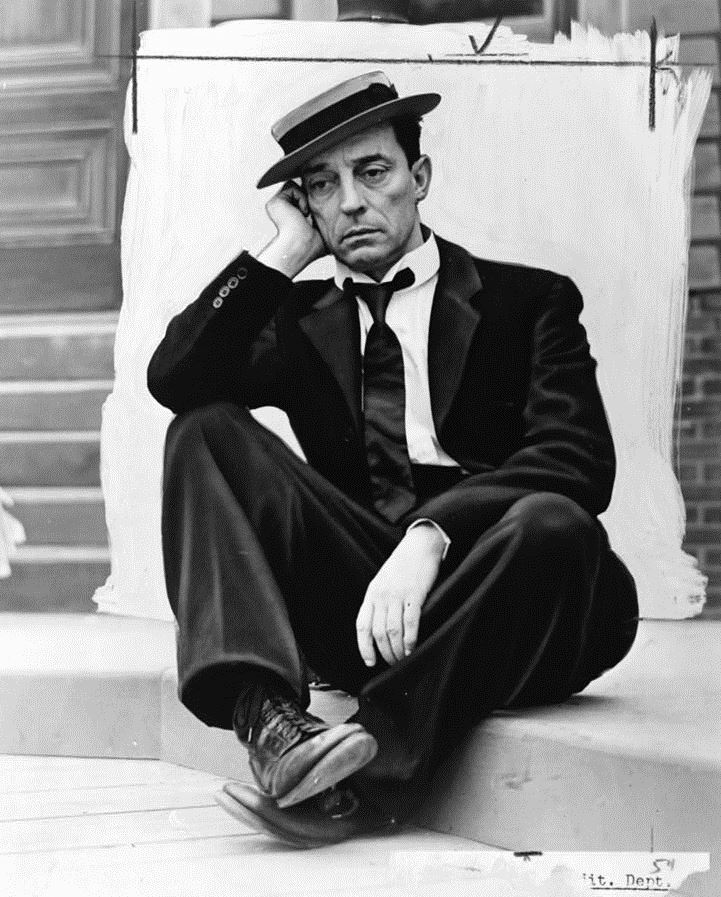
Buster Keaton

Buster Keaton

We love most Quentin Tarantino movies, but man, do his characters fill the frame with words. Vincent Vega: a talker. Nice Guy Eddie Cabot: a talker.

There was a time, though, when motion pictures relied on visuals to tell stories. Silent star Buster Keaton says he and Charlie Chaplin once battled to see who could use the fewest title cards. (Title cards, for those who've never seen a silent movie, are interstitials with words telling viewers what characters are saying or providing a bit of background information.)

"We eliminated subtitles as fast as we could," Keaton says.

At the time, Keaton says most seven-reel movies used as many as 240 title cards. In their friendly competition, Chaplin won, wrapping up a film with just 21 cards, compared to 23 for Keaton.

The most he ever used in a film?

Fifty-six, Keaton says.

Keaton's short interview with the legendary Studs Terkel has dozens of other nice moments. Among them, Keaton offers tips on how to stage a fight scene, why he never wrote scripts for his films and why movies need a strong beginning and end before filming begins (the middle can be figured out later).

More here.